



SMC vs Private Limited Company Which Is Right for You?
Starting a business is an exciting journey, but choosing the right business structure is one of the most important decisions you’ll make. In Pakistan, two of the most popular company structures registered with the Securities and Exchange Commission of Pakistan (SECP) are the Single Member Company (SMC) and the Private Limited Company (Pvt. Ltd.).
Many entrepreneurs struggle to decide which option best suits their business goals. Should you register as an SMC because you’re the only owner? Or should you choose a Private Limited Company if you plan to grow your business with partners or investors?
This guide explains the differences between both business structures in simple language to help you make the right decision.
What is a Single Member Company (SMC)?
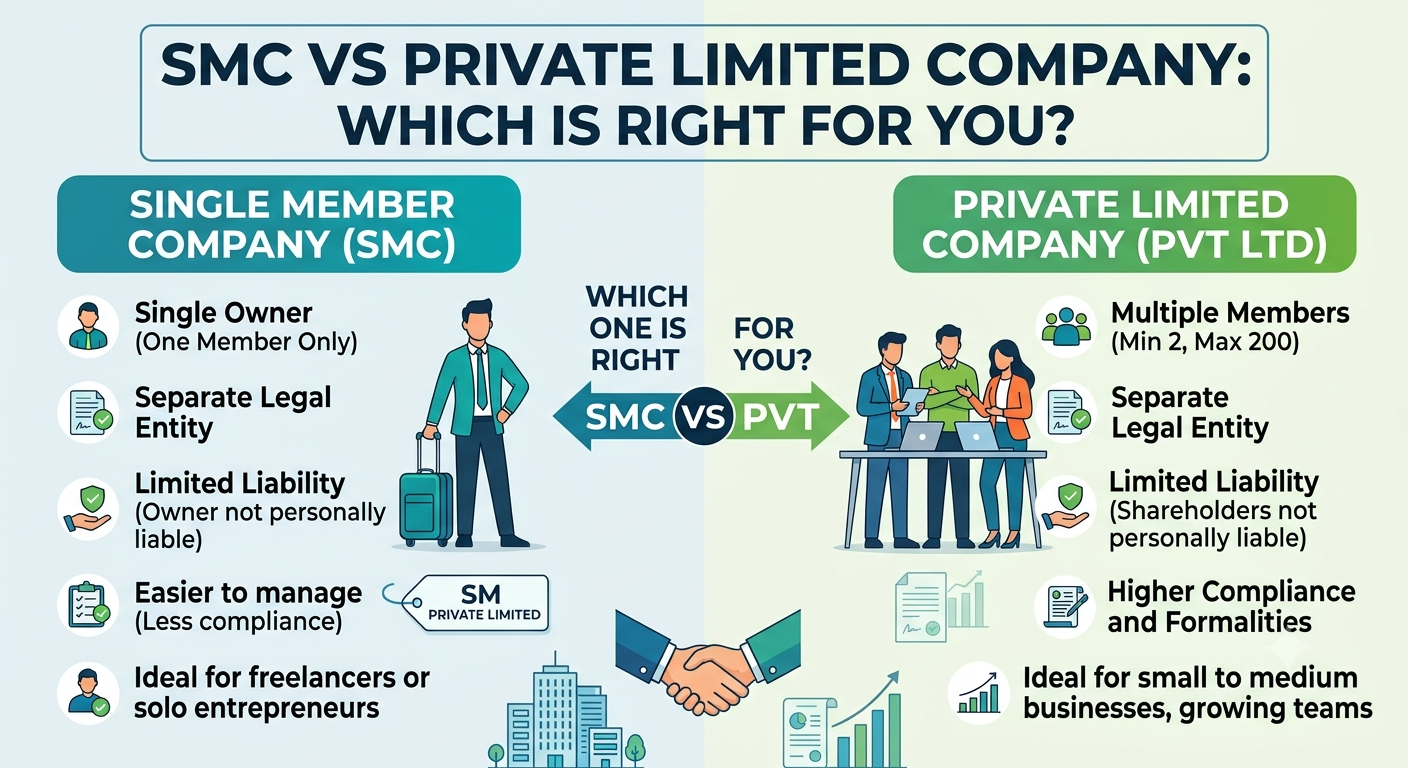
A Single Member Company (SMC) is a company that is owned by only one person. It has a separate legal identity, meaning the company and the owner are treated as separate entities under the law.
An SMC is ideal for freelancers, consultants, online sellers, small business owners, and entrepreneurs who want full control of their business while enjoying limited liability protection.
Unlike a sole proprietorship, an SMC protects the owner's personal assets if the company faces financial or legal issues.
A Private Limited Company is a business structure that has at least two shareholders. Like an SMC, it also has its own legal identity and provides limited liability protection to its owners.
A Private Limited Company is generally suitable for startups, family businesses, growing companies, and businesses planning to attract investors or expand their operations.
Because ownership is shared between multiple shareholders, decisions are usually made collectively according to the company’s Articles of Association.
Key Differences Between SMC and Private Limited Company
Although both company types are registered with SECP and offer limited liability, there are several important differences.
Ownership
An SMC can only have one shareholder, while a Private Limited Company requires two or more shareholders.
Management
In an SMC, one person controls the company and makes all major decisions.
In a Private Limited Company, management responsibilities are shared among directors and shareholders.
Investment Opportunities
An SMC has limited options for raising investment because it has only one owner.
A Private Limited Company is better suited for attracting investors, business partners, and future shareholders.
Business Growth
If you plan to keep your business small and operate independently, an SMC is usually enough.
However, if you expect your business to expand, hire partners, or seek funding, a Private Limited Company offers greater flexibility.
Decision Making
Decision-making is faster in an SMC because only one owner is involved.
In a Private Limited Company, important decisions often require approval from directors or shareholders.
Advantages of a Single Member Company:
An SMC offers several benefits for solo entrepreneurs:
- Complete ownership and control.
- Limited liability protection.
- Separate legal identity.
- Professional business image.
- Easy company management.
- Suitable for startups and freelancers.
Advantages of a Private Limited Company
A Private Limited Company provides additional opportunities for growing businesses.
Some major advantages include:
- Multiple shareholders can own the business.
- Easier to raise investment.
- Higher credibility among banks and investors.
- Better opportunities for business expansion.
- Limited liability for all shareholders.
- Long-term business continuity.
The right choice depends on your business goals.
Choose a Single Member Company (SMC) if:
- You are starting your business alone.
- You want complete control over business decisions.
- You are a freelancer, consultant, or small business owner.
- You don’t plan to bring in investors immediately.
- You want a simple company structure.
Choose a Private Limited Company if:
- You have one or more business partners.
- You plan to raise investment.
- You want to expand your business.
- You expect to hire directors or additional shareholders.
- You want a business structure suitable for long-term growth.
Can You Convert an SMC into a Private Limited Company?
Yes.
Many entrepreneurs start with an SMC because it is simple to manage. As their business grows, they later convert it into a Private Limited Company by adding another shareholder and completing the required SECP formalities.
This flexibility allows businesses to start small and expand when needed.
Documents Required for Company Registration
Although requirements may vary slightly, the following documents are generally required:
- Valid CNIC or Passport of shareholders.
- Registered office address.
- Proposed company name.
- Email address and mobile number.
- Memorandum of Association (MOA).
- Articles of Association (AOA).
- SECP registration documents.
Professional consultants can help prepare and submit these documents correctly.
Business Baba offers complete SMC Registration and Private Limited Company Registration Services in Pakistan. Our experienced consultants assist with company name reservation, document preparation, SECP registration, NTN registration, and post-incorporation compliance.
Whether you’re launching your first startup or planning to register a growing business, our team ensures a smooth, transparent, and hassle-free registration process from start to finish.
Related Posts
Trademark Classes in Pakistan: Which Class Is Right for Your Business?
Trademark Classes in Pakistan: Which Class Is Right for Your Business? When applying for trademark…
Before You Launch Your Brand: A Complete Legal Checklist for Businesses in Pakistan
Before You Launch Your Brand A Complete Legal Checklist for Businesses in Pakistan Launching a…
7 Trademark Mistakes That Can Cost You Your Brand
7 Trademark Mistakes That Can Cost You Your Brand You’ve spent months building your business.…
How to Conduct a Trademark Search Before Applying in Pakistan
(Complete Guide) How to Conduct a Trademark Search Before Applying in Pakistan Imagine spending months…