



The Complete Guide to

Copyright Registration in Pakistan (2026)

Table of Content:

Every day, writers, artists, software developers, photographers, musicians, businesses, and content creators invest time and creativity into producing original work. Without proper legal protection, however, that work can be copied, distributed, or used without permission, resulting in financial loss and damage to the creator’s reputation.

Copyright registration provides legal recognition of your ownership and helps protect your intellectual property from unauthorized use. Although copyright protection generally exists from the moment an original work is created, registering your copyright strengthens your legal position by providing official evidence of ownership and making it easier to enforce your rights in case of infringement.

In Pakistan, copyright registration is governed by the Copyright Ordinance, 1962 and is administered by the Intellectual Property Organization (IPO) Pakistan. Whether you are an individual creator, a startup, or an established business, registering your copyright is an important step in safeguarding your creative assets.

In this complete guide, you’ll learn what copyright is, what can be protected, the registration process, required documents, fees, legal benefits, and everything else you need to know about copyright registration in Pakistan.

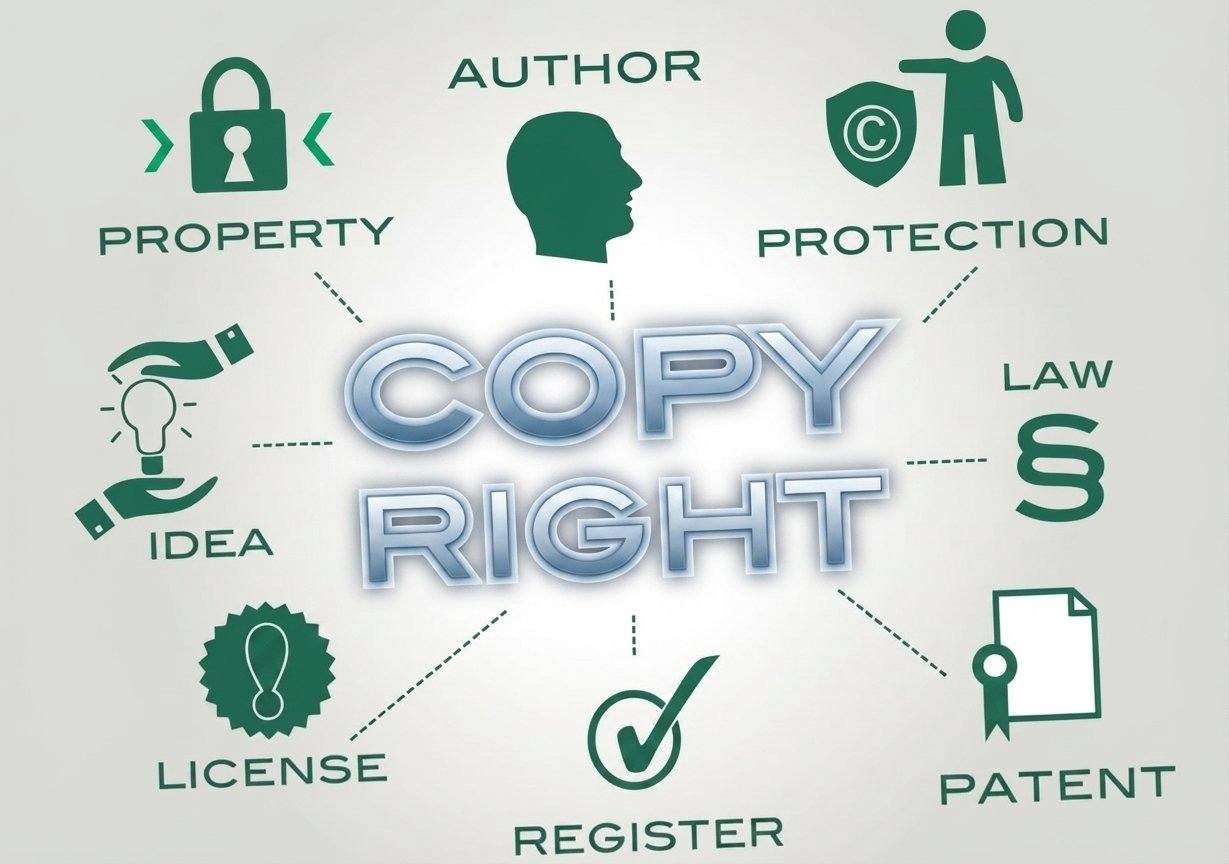
Copyright is a legal right that protects original creative works from being copied, distributed, published, or used without the permission of the creator or copyright owner. It gives creators exclusive rights over how their work is used, allowing them to control reproduction, distribution, adaptation, and commercial use.

In Pakistan, copyright protection is governed by the Copyright Ordinance, 1962 and applies to a wide range of original works, including books, articles, software, music, films, photographs, artwork, architectural designs, and website content.

It is important to understand that copyright protects the expression of an idea, not the idea itself. For example, the content of a book or the source code of a software program can be protected by copyright, but the underlying concept or idea cannot.

Although copyright protection generally exists automatically once an original work is created and fixed in a tangible form, registering your copyright provides official proof of ownership and strengthens your legal rights, making it easier to enforce your rights if someone infringes your work.

Business Baba (SMC-Pvt) Ltd

Business Baba (SMC-Pvt) Ltd provides expert Business Registration Services Pakistan. We help entrepreneurs start and grow businesses legally through Company Registration , Trademark Registration , Copyright Registration , NTN registration, and compliance services.

Copyright protects original creative works that are expressed in a tangible form. However, it does not protect ideas, facts, or concepts themselves. Understanding what qualifies for copyright protection can help you determine whether your work is eligible for registration.

What Can Be Copyrighted?

The following types of original works can generally be protected by copyright:

  • Literary works, including books, articles, blogs, and eBooks
  • Computer software, mobile applications, and source code
  • Website content and digital publications
  • Music, songs, and sound recordings
  • Films, videos, and other audiovisual works
  • Photographs and digital images
  • Paintings, illustrations, drawings, and graphic designs
  • Architectural drawings and artistic works
  • Educational materials, research papers, and manuals
  • Advertisements and other original creative content
What Cannot Be Copyrighted?

Copyright does not protect:

  • Ideas, concepts, or methods
  • Facts, data, and discoveries
  • Titles, names, slogans, or short phrases
  • Business names and logos (these are generally protected through trademark registration)
  • Government laws, official notifications, and judicial decisions
  • Works that are already in the public domain
  • Common symbols or simple geometric shapes without sufficient originality

If your work is original and demonstrates creativity, it is likely eligible for copyright protection. If you are unsure whether your work qualifies, consulting a copyright professional can help you choose the right form of intellectual property protection.


Your creative work is a valuable asset, and protecting it is essential to prevent unauthorized use. While copyright generally exists automatically when an original work is created, registering your copyright provides stronger legal protection and official proof of ownership.

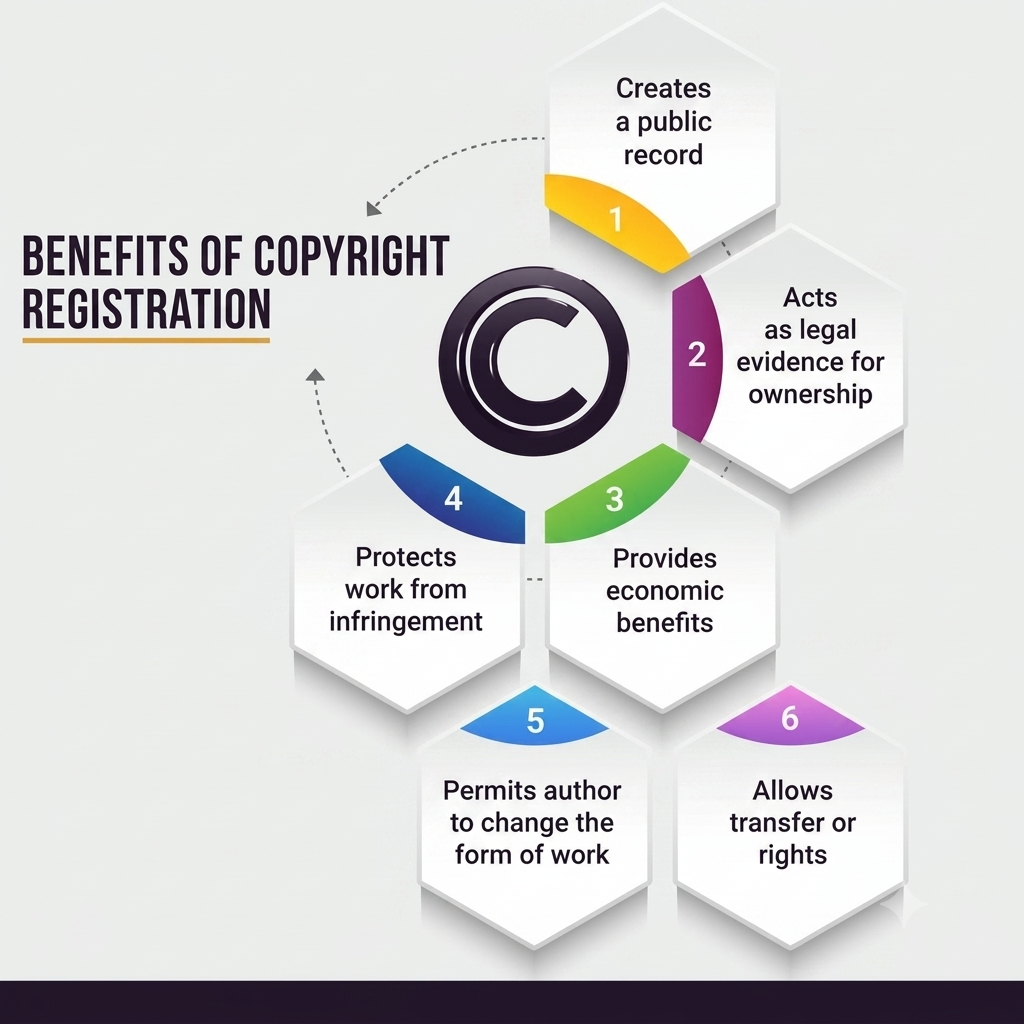
Copyright registration makes it easier to enforce your rights if someone copies, distributes, or commercially exploits your work without permission. It also enhances the value of your intellectual property by allowing you to license, sell, or transfer your rights with greater confidence.

Some of the key reasons to register your copyright include:

  • Establishes official evidence of ownership
  • Protects your work from unauthorized copying and misuse
  • Strengthens your position in legal disputes
  • Allows you to license or sell your copyrighted work
  • Enhances the commercial value of your intellectual property
  • Builds trust with clients, investors, and business partners
  • Safeguards your creative efforts and future income

Whether you are an author, software developer, artist, photographer, filmmaker, musician, or business owner, copyright registration is an important step in securing your creative work and protecting your legal rights.

Copyright Law in Pakistan

Copyright Law in Pakistan

Copyright protection in Pakistan is primarily governed by the Copyright Ordinance, 1962, which provides the legal framework for protecting original literary, artistic, musical, dramatic, and other creative works. The law grants creators exclusive rights to reproduce, publish, distribute, adapt, and commercially use their work. The registration and administration of copyrights are handled by the Intellectual Property Organization (IPO) Pakistan, the government body responsible for intellectual property rights in the country. While copyright protection generally arises automatically once an original work is created and fixed in a tangible form, registration provides official evidence of ownership and strengthens the owner's legal position in case of disputes. The Copyright Ordinance also outlines the rights of copyright owners, the duration of protection, licensing and assignment of copyrights, and the legal remedies available against copyright infringement. Anyone who reproduces, distributes, or uses a copyrighted work without permission may face civil or criminal consequences under Pakistani law. Understanding the Copyright Ordinance and related regulations is essential for creators and businesses seeking to protect their intellectual property and enforce their rights effectively.

Who Can Apply for Copyright Registration?

Copyright registration in Pakistan can generally be sought by the creator or lawful owner of an original work. The applicant may be an individual, a company, or another eligible organization, depending on who owns the copyright.

Common applicants include:

  • Authors and writers for books, articles, blogs, and other literary works.
  • Artists and designers for paintings, illustrations, graphics, and other artistic works.
  • Photographers and filmmakers for photographs, films, and videos.
  • Musicians and composers for original musical works.
  • Software developers and companies for computer programs and software.
  • Businesses and organizations for original content created or owned by them.
  • Copyright assignees or legal owners who have acquired copyright through a valid transfer or assignment.

If a work is created by an employee or commissioned from another person, ownership may depend on the applicable agreement and copyright law. Therefore, it is important to establish who legally owns the work before applying for registration.

Documents Required for Copyright Registration

The documents required for copyright registration in Pakistan may vary depending on the type of work and applicant. Providing complete and accurate documents helps avoid unnecessary delays during the registration process.

Commonly required documents may include:

  • Completed copyright application form
  • Copy of CNIC for individual applicants
  • Copy of passport for foreign applicants, where applicable
  • A copy of the work being submitted for registration
  • Proof of ownership or relevant ownership details
  • Power of Attorney or authorization letter, if an agent is filing the application
  • Company registration documents, if the applicant is a company
  • NOC or consent documents, where required
  • Prescribed government fee/challan

Additional documents may be required depending on whether you are registering software, a literary work, artistic work, music, film, or another type of copyrighted material.

Before submitting an application, it is advisable to check the latest requirements with IPO Pakistan or a professional copyright service provider to ensure that all necessary documents are properly prepared.

Step-by-Step Copyright Registration Process

Registering a copyright in Pakistan involves several steps, from preparing your work and documents to receiving the registration certificate. The exact requirements may vary depending on the type of work.

1. Prepare Your Work and Documents

Prepare the original work you want to register along with the required identification, ownership, application forms, and supporting documents.

2. Complete the Application

Fill out the copyright registration application with accurate information about the applicant, copyright owner, and the work being registered.

3. Submit the Application

Submit the completed application, required documents, copy of the work, and applicable government fee to the relevant copyright registration office.

4. Examination of the Application

The application is reviewed to check whether the required information and documents are complete and whether there are any issues with the application.

5. Address Objections, If Any

If an objection or clarification is raised, the applicant may need to provide additional information or respond within the required timeframe.

6. Approval and Registration

Once the application is accepted and any objections are resolved, the copyright is registered and the registration details are recorded.

7. Receive the Copyright Certificate

After successful registration, the applicant receives the copyright registration certificate, which serves as important official evidence of the registered copyright.

Tip: Keep copies of your application, submitted work, receipts, and registration certificate safely. These records can be useful if you later need to prove ownership or enforce your copyright.

Copyright Duration and Rights of the Owner
Copyright Duration and Rights of the Owner

Copyright gives the owner legal control over how their original work is used, reproduced, distributed, adapted, or commercially exploited. The duration of protection depends on the type of work and the applicable provisions of Pakistani copyright law.

Duration of Copyright

Under Pakistan’s copyright framework, the period of protection varies according to the nature of the work. For many literary, dramatic, musical, and artistic works, protection is generally linked to the life of the author plus a specified period after their death. Different rules may apply to works such as films, sound recordings, government works, and works published anonymously or under a pseudonym.

Rights of the Copyright Owner

A copyright owner may have the exclusive right to:

  • Reproduce the work
  • Publish and distribute copies of the work
  • Adapt or modify the work
  • Translate the work
  • Communicate or perform the work publicly, where applicable
  • Authorize others to use the work through licensing
  • Transfer or assign copyright rights where legally permitted
  • Take legal action against unauthorized use or infringement

The specific rights and duration depend on the type of copyrighted work and the circumstances of ownership. Therefore, creators should understand the applicable rules before licensing, transferring, or commercially using their copyright.

Copyright Infringement and Legal Remedies

Copyright infringement occurs when someone copies, reproduces, distributes, publishes, or commercially uses a copyrighted work without the owner’s permission. Common examples include copying website content, using photographs without authorization, reproducing books, or distributing pirated software.

In Pakistan, copyright owners can take legal action against infringement. Depending on the circumstances, available remedies may include:

  • Injunctions to stop unauthorized use
  • Compensation or damages for losses
  • Seizure or destruction of infringing copies
  • Criminal penalties, where applicable under copyright law

If your copyrighted work is being used without permission, keeping evidence of ownership and the unauthorized use can be important when pursuing a legal remedy.

Read more


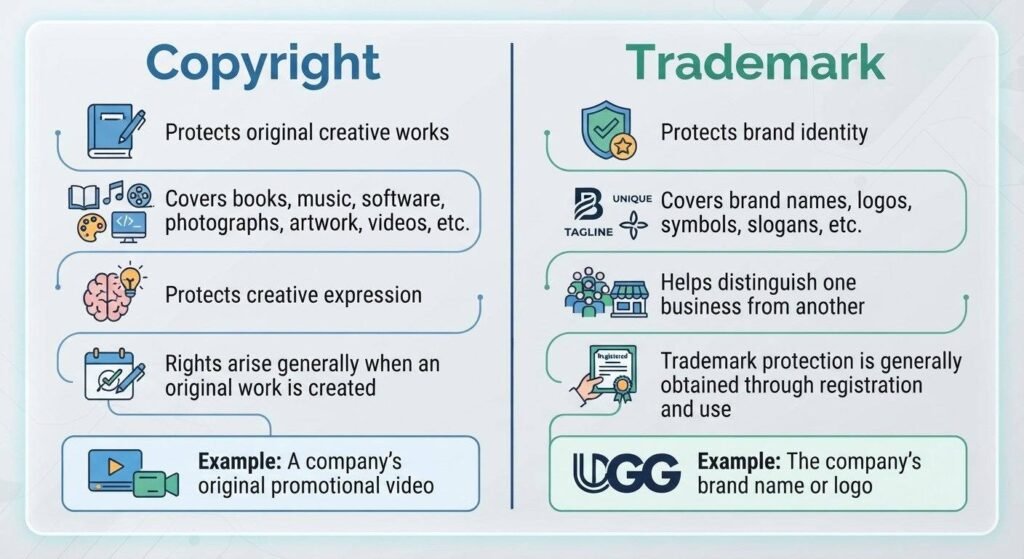
Copyright and trademark both protect intellectual property, but they protect different types of assets. Copyright primarily protects original creative works, while trademarks protect signs that distinguish a business or its goods and services.

Copyright vs Trademark

Example: If you create a unique logo for your business, the artistic elements may potentially receive copyright protection, while registering the logo or brand name as a trademark provides protection for its use as a brand identifier.

For businesses, copyright and trademark protection can therefore work together to protect different aspects of their intellectual property.

Common Mistakes to Avoid During Registration

Avoiding simple mistakes can make the copyright registration process smoother and prevent unnecessary delays. Common mistakes include:

  • Providing incorrect or incomplete information
  • Submitting incomplete documents
  • Failing to provide the correct copy of the work
  • Claiming ownership without proper proof
  • Choosing the wrong category of work
  • Missing required fees or signatures
  • Ignoring objections or requests for additional information

Always review your application and documents carefully before submission to ensure everything is accurate and complete.


Registering copyright can involve paperwork, legal requirements, and careful documentation. Business Baba helps individuals, creators, and businesses navigate the process with professional support.

With Business Baba, you can get:

  • Expert guidance throughout the registration process
  • Document preparation and review
  • Assistance with application submission
  • Support in handling queries or objections
  • Clear guidance on requirements and procedures
  • Convenient and professional copyright registration services

Whether you are protecting a book, software, artwork, website content, music, or other creative work, Business Baba can help make the registration process simpler and more organized.

Frequently Asked Questions (FAQs)

1. Is copyright registration mandatory in Pakistan?

No. Copyright protection generally exists automatically when an original work is created. However, registration provides official evidence of ownership.

2. How long does copyright protection last?

The duration depends on the type of work and the applicable provisions of Pakistani copyright law.

3. What can I register as copyright?

Books, articles, software, photographs, music, videos, artwork, website content, and other original creative works can generally qualify.

How to Change my Photo from Admin Dashboard?

Far far away, behind the word mountains, far from the countries Vokalia and Consonantia, there live the blind texts. Separated they live in Bookmarksgrove right at the coast

4. How much does copyright registration cost in Pakistan?

The cost depends on the type of work and applicable government fees, along with any professional service charges.

5. Can I register software under copyright?

Yes. Original computer software and source code can generally be protected through copyright.

6. What happens if someone copies my copyrighted work?

You may be able to take legal action and seek remedies such as an injunction, damages, or other relief available under Pakistani law.

7. Can a company own copyright?

Yes. A company can own copyright where it is the lawful copyright owner or has acquired the rights through a valid arrangement or assignment.

8. Do I need a lawyer to register copyright?

Not necessarily. However, professional assistance can help ensure that your application and documents are properly prepared.

9. Can I copyright an idea?

No. Copyright generally protects the original expression of an idea, not the idea or concept itself.

10. Can copyright be transferred?

Yes. Copyright can generally be assigned or licensed subject to the requirements of applicable law.

11. Can I register unpublished work?

Yes, unpublished original works may be eligible for copyright registration, subject to the applicable requirements.

12. How can Business Baba help with copyright registration?

Business Baba can assist with understanding requirements, preparing documents, submitting the application, and navigating the registration process.
  1. Copyright Law in Pakistan – Business Baba

    August 31, 2026

    […] Read more about CopyRight Registration […]

Post a comment

Your email address will not be published.

Related Posts